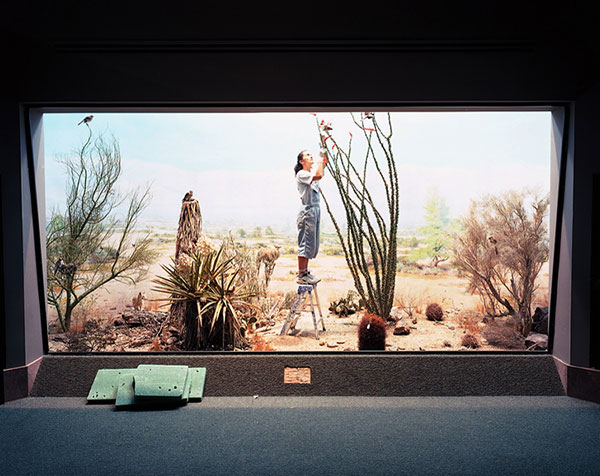
Saw his show in NY last spring and was struck by how funny and beautiful the images of natural history museums were. Equally arresting are his images of sterlings and the Unabomber's shed. Check out more of Richard's work
Oscar Fernando Gómez Rodríguez is a taxicab driver and wonderful photographer from Monterrey, Mexico, who most often shoots from right inside his taxi. He was featured in the Fall 2010 issue of Aperture, with an introduction by Martin Parr. Read his bio/statement here.
In Art, Anything is Possible: A Conversation with Yinka Shonibare by Jan Garden Castro
Visually arresting, Yinka Shonibare’s art plays imaginatively with stereotypes about race, class, culture, gender, and sexuality in order to deconstruct these concepts and show that they are “manufactured.” His re-creations include Diary of a Victorian Dandy, a suite of large photographs based on Hogarth’s The Rake’s Progress, in which he portrays the Victorian dandy; a film with black and white ballerinas based on Swan Lake; and many three-dimensional tableaux of figures, both imagined and based on known people and paintings, such as The Swing by Fragonard. While Shonibare alludes to historical periods, artworks, events, and people, the differences between the originals and his own works are central to his message.
The tableaux usually feature headless figures dressed in exaggerated fashions. Shonibare favors the Victorian era for its aristocratic repression of high emotions behind lavish attire and manners. Yet his figures are not pure Victorians; their clothes are made of the kind of brightly colored fabric worn by working-class Africans in the ’60s and ’70s. The cloth itself is hybrid, fusing Indonesian designs, British and Dutch manufacture, and the symbols and myths of African identity; as such, it symbolizes a mixed representation of Africa.



 Fraternal
 The Recital
 Dawn
Dawn


